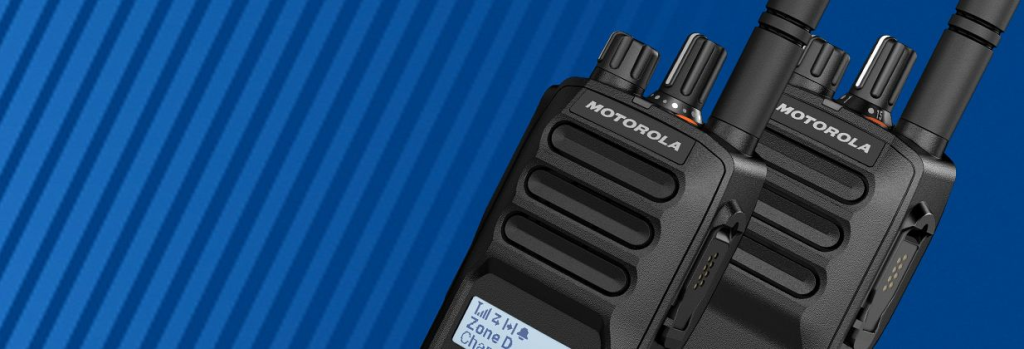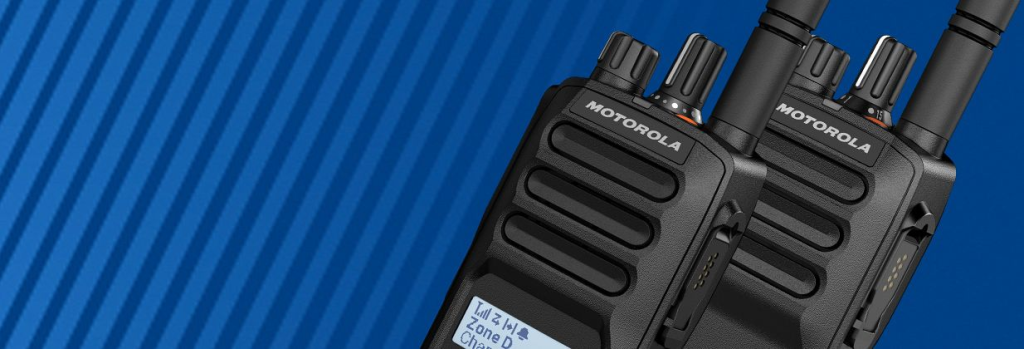
Two way Radio
Portable, battery-operated communication device, commonly called a walkie talkie (or handheld transceiver/two-way radio), relies on radio waves to transmit and receive voice messages. Unlike a regular broadcast radio, a walkie talkie is a two-way device, allowing users to both transmit and receive messages.
walkie talkie


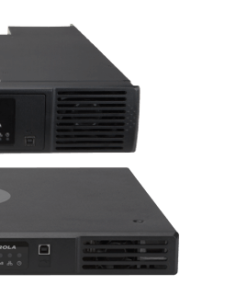
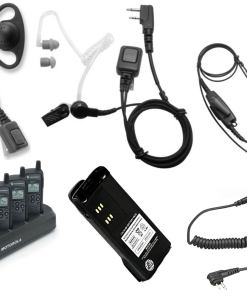
Digital Mobile Radio (DMR) A Revolution in Two Way Communication
Digital Mobile Radio (DMR) walkie talkie represents a significant leap forward from traditional analog two-way radio systems, establishing itself as an international open standard for professional mobile radio users. Developed by the European Telecommunications Standards Institute (ETSI) and first ratified in 2005, DMR was designed with the goals of providing a low-complexity, cost-effective digital solution while ensuring interoperability between different manufacturers equipment. This commitment to an open standard provides users with security of supply and the benefits of continuous, competitive development.
Core TDMA Technology for Doubled Capacity
The foundation of DMR’s efficiency is its use of Time Division Multiple Access (TDMA) technology. DMR walkie talkie operates within the existing 12.5 kHz channel spacing used globally in licensed land mobile frequency bands. However, TDMA allows a single 12.5 kHz channel to be divided into two independent time slots (A and B), effectively creating two simultaneous and separate communication paths. This technique doubles the channel capacity of the system compared to analog or other digital technologies that use Frequency Division Multiple Access (FDMA) to achieve 6.25 kHz equivalent channels.
This two-slot TDMA approach offers substantial benefits beyond just capacity. Since a radio only needs to transmit for half the time (one time slot), the transmitter is idle for the other half. This reduced transmit duty cycle leads to a notable improvement in battery life, often up to 40% longer talk time compared to analog or single-slot digital radios. Furthermore, using a single 12.5 kHz channel to carry two conversations allows for simpler infrastructure, as a repeater only needs one antenna and a simple duplexer, minimizing investment in combining equipment.
The Three Tiers of DMR
The DMR standard is divided into three tiers, each targeting different user needs and system complexity:
-
DMR Tier I (License-Free): These products are specified for low-power, non-infrastructure use (without repeaters) in license-free bands, such as the PMR446 band. They are primarily aimed at consumer and low-power commercial applications, using a maximum of 0.5 Watts RF power.
-
DMR Tier II (Licensed Radio): This tier covers licensed conventional radio systems, including mobiles and hand-portable units operating in licensed frequency bands (VHF and UHF MHz). Tier II focuses on spectral efficiency, advanced voice features, and integrated IP data services, leveraging two-slot TDMA for professional users who need high-power communications and good coverage.
-
DMR Tier III (Licensed Trunking): Tier III builds on Tier II by adding trunking operation. Trunking automatically manages and allocates a pool of channels to a large group of users, dynamically assigning time slots as calls are made. This provides highly efficient channel usage for large organizations or public safety agencies, supporting voice, short messaging, and packet data services (including IPv4/IPv6).
Enhanced Features and Benefits
-
Superior Audio Quality: Digital signal processing, coupled with advanced audio codecs delivers crystal-clear voice communication. This process effectively suppresses background noise, maintaining high voice intelligibility, even at the farthest edges of the transmission range. Forward Error Correction (FEC) also helps receiving walkie talkie detect and correct transmission errors, improving coverage.
-
Integrated Data Capabilities: DMR is an end-to-end digital system that easily supports data applications alongside voice. Common features include text messaging, GPS tracking for real-time location monitoring of personnel and assets, and telemetry/SCADA for remote monitoring. The simultaneous use of the second TDMA time slot for data (while voice is in the first) ensures that essential data like GPS updates do not interrupt ongoing conversations.
-
Enhanced Security: DMR provides robust security features, including various encryption options (such as AES-256) to protect sensitive conversations from eavesdropping, making it a reliable choice for law enforcement, healthcare, and corporate security.
-
Smooth Migration: Most DMR radios support mixed-mode operation (digital and analog), allowing organizations to transition from legacy analog systems gradually without needing to replace all equipment simultaneously.
In summary, DMR two-way radios offer a powerful, flexible, and scalable communication platform. By maximizing spectral efficiency through two-slot TDMA, delivering superior audio clarity, integrating sophisticated data applications, and enhancing battery life and security, DMR has become the preferred choice for professional, business-critical, and mission-critical users worldwide.